Senigallia Biennale 2025: Shedding Light on the Scientific Legacy of Nicéphore Niépce
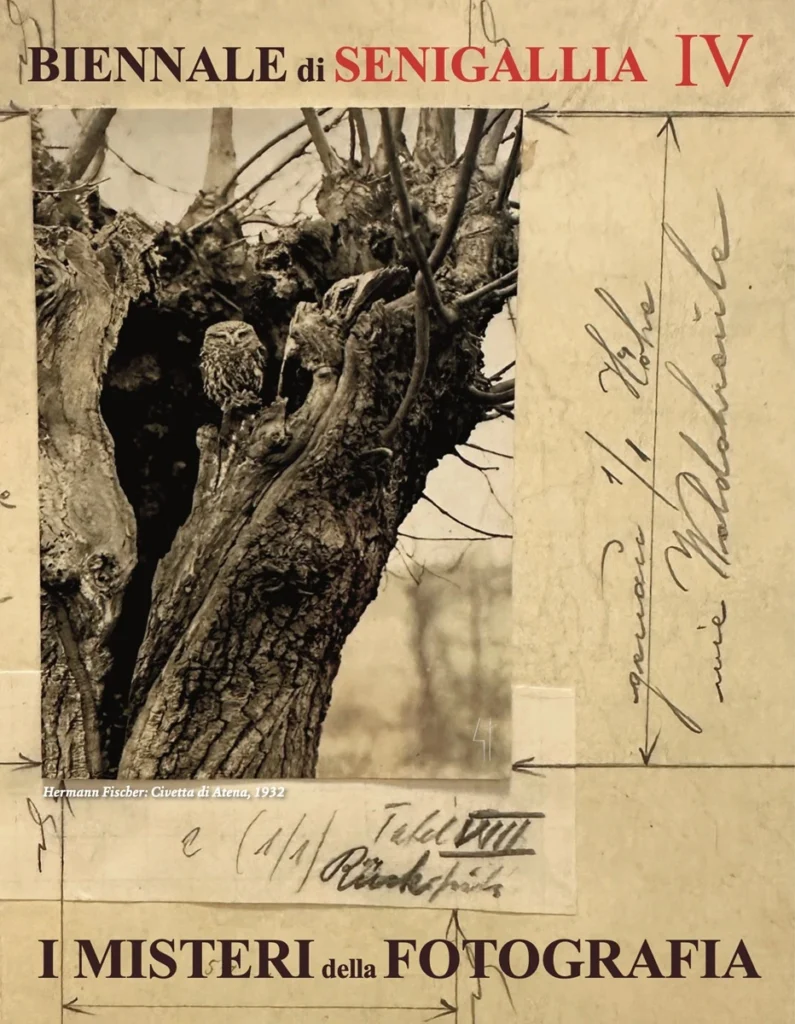
Organized in Italy, on the Adriatic coast in the city of Senigallia (Marche region), the Senigallia Biennale is a cultural event dedicated to the history of photography and the study of its origins.
Established in 2019 at the initiative of European historians and researchers, it stands out for its scientific and material approach to the medium, prioritizing the analysis of early processes and photographic objects.
A Biennale Dedicated to the History of Photography
Unlike many contemporary festivals, the Senigallia Biennale focuses on the early days of photography, technical experimentation, and the founding figures of the 19th century.
It is part of the “Senigallia Città della Fotografia” project, led by the municipality and several local cultural institutions.
The 2025 edition took place from June 18 to 21 (with main conferences from June 19 to 21), bringing together researchers, collectors, and institutions around a program of exhibitions, conferences, and a fair dedicated to vintage photographs and historical equipment.
A 2025 Edition Centered on Nicéphore Niépce
The 2025 Biennale gave a central place to Nicéphore Niépce, a pioneer of photography, by exploring the conditions surrounding the invention of the medium and the technical innovations of the 1820s.
Exhibitions, rare documents, and historical devices made it possible to revisit the first experiments in heliography and the emergence of photography as both a technique and a visual language.
This scientific and historical orientation also opened the way to a broader reflection on Niépce’s inventions, beyond the sole field of photography.
Pierre-Yves Mahé’s Lecture: Niépce and the Combustion Engine
In this context, Pierre-Yves Mahé, Director of the Musée Maison Nicéphore Niépce, delivered a lecture devoted to a still little-known aspect of the inventor’s work: his research in the field of energy and, in particular, the invention of the Pyréolophore.
This machine, designed with his brother Claude Niépce and patented in 1807, is now considered the first internal combustion engine. Through the presentation of documents preserved at the Maison Niépce—particularly official records attesting to this invention—Pierre-Yves Mahé highlighted the importance of this contribution in the history of science and technology.
A reproduction of the Pyréolophore entered the Musée des Arts et Métiers in September 2018.
His lecture shed light on the deeply experimental nature of Niépce’s work, whose research forms a continuum between chemistry, physics, image-making, and energy.
Reassessing Niépce’s Place in the History of Inventions
Beyond the historical presentation, the lecture raised the question of how inventors are recognized and how scientific narratives are constructed. It notably emphasized Nicéphore Niépce’s decisive role in several major fields, while recalling that his name was long overshadowed in the history of photography.
By reintegrating the Pyréolophore into the inventor’s overall trajectory, Pierre-Yves Mahé helped broaden the understanding of his work and reaffirm his central role in the history of 19th-century innovation.
The Maison Niépce at the Heart of International Exchanges
The participation of the Musée Maison Nicéphore Niépce in the Senigallia Biennale 2025 reflects its commitment to international networks dedicated to research and the dissemination of knowledge about the origins of photography.
In a context where the history of the medium is undergoing renewed approaches, these exchanges contribute to enriching the interpretation of collections and to promoting, to a wider audience, the scientific and cultural significance of Nicéphore Niépce’s work.